
Only bona fide victims would be compensated by banks within five days of receiving the complaint.

After a 25 basis point rate cut in December, the RBI on Friday decided to pause on the policy rate front amid geopolitical uncertainties.

The Reserve Bank of India (RBI) on Friday announced a set of liquidity measures through open market operations (OMOs), dollar-rupee buy-sell swaps, and long-term variable rate repo (VRR) operations, in a bid to infuse liquidity into the banking system.

Identity of next central bank chief remains a matter of speculation.

Congress leader Shashi Tharoor discusses India's role in the US-Iran peace talks taking place in Islamabad, emphasising the importance of peace over competition with Pakistan and highlighting India's regional interests.

Hyderabad Police Commissioner V C Sajjanar has proposed a Joint Working Group with the RBI and banks to address the issue of mule bank accounts used in cyber fraud. The proposal follows 'Operation Octopus,' which exposed vulnerabilities in KYC verification. Sajjanar also recommended strict directives for banks to fix accountability and adopt advanced technology to detect suspicious transactions.

For commercial banks to float subsidiaries, approval from the Reserve Bank of India (RBI) may not remain mandatory, according to highly placed sources.

Tension between the government, specially the finance ministry, and RBI is as old as the central bank itself.

Sanjay Malhotra on Wednesday took charge as the 26th Governor of the Reserve Bank of India. Malhotra, a career bureaucrat, arrived at the central bank's headquarter this morning, where he was welcomed by senior RBI staffers. The central bank confirmed Malhotra's appointment through a post on the microblogging site "X" and also shared a few pictures.

Officials from both India and the US in the recent past have indicated that a "fair deal" will be concluded soon, with Indian officials holding that more formal rounds of talks are not needed.

The Reserve Bank of India (RBI) on Tuesday announced a fresh round of liquidity measures through open-market operations (OMOs) and a foreign exchange buy-sell swap, under which it will inject close to Rs 3 trillion into the banking system. The central bank said it would purchase Government of India securities worth Rs 2 trillion through OMOs, spread across four tranches of Rs 50,000 crore each to be conducted on December 29, January 5, January 12 and January 22.

Large tariffs by the United States administration and elevated geopolitical risk have increased near-term global financial stability risks, and along with weather events pose downside risks to domestic growth, Reserve Bank of India (RBI) Governor Sanjay Malhotra said in the foreword to the Financial Stability Report released on Monday.

The Reserve Bank of India (RBI) does not target any price level on the rupee, Governor Sanjay Malhotra reiterated at an International Monetary Fund and World Bank event on Wednesday.

Reserve Bank Governor Sanjay Malhotra on Saturday said that the market forces decide the value of rupee with respect to the US dollar and the central bank is not worried about day-to-day movement of the currency value.
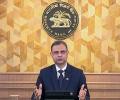
Reserve Bank will "wait and watch" the evolving situation before deciding on any further rate cut, Governor Sanjay Malhotra has said as he emphasised that both growth and price stability are equally important. With inflation on a downward trend, the RBI's Monetary Policy Committee (MPC) has been reducing the benchmark repo rate and has adopted a neutral stance, which also gives the flexibility to either cut or hike the rate going forward. The central bank has cummulatively reduced the repo rate by 100 basis points since February.

'Whether you will bring this down and cause hurt to senior citizens, who are probably living on that little interest rate that they earn out of it... But equally, if I just look at the kitty of the National Small Savings Fund, it is from that same kitty that I'm borrowing.'
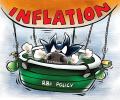
The Indian government has extended the Reserve Bank of India's (RBI) mandate to maintain retail inflation at 4 per cent, with a tolerance band of 2 per cent on either side, for another five years until March 2031.

As the rupee remains under pressure due to several headwinds and the uncertainty around the India-US trade deal, the Reserve Bank of India (RBI) has been stepping in only to calm volatility, not to stop the fall.

If TVK MLAs and ministers are perceived as clean, or demonstrably cleaner than their predecessors, the credibility dividend will be enormous. The voter will feel rewarded, points out Ramesh Menon.

Reserve Bank Governor Sanjay Malhotra on Wednesday exhorted the fledgling fintech ecosystem to focus on the underserved sections of the society to deepen financial inclusion. Speaking at the annual Global Fintech Fest in Mumbai, Malhotra accepted that serving the "privileged" will be a lucrative business, but urged the smaller companies to focus on the underserved.
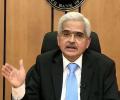
Reserve Bank Governor Shaktikanta Das on Tuesday said the fiscal-monetary coordination was at its best during the last six years even as he thanked Prime Minister Narendra Modi for giving the opportunity to head the monetary authority of the country. Das, in a series of posts on X, on his last day of his six-year term as RBI Governor, also thanked the Finance Minister, various stakeholders and his colleagues at the central bank.

Gold has emerged as the most stable asset during episodes of geopolitical stress, and crude oil has been more sensitive than others when it comes to regional conflicts and sanctions, according to a report in the Reserve Bank of India's (RBI's) monthly bulletin. Silver and the United States Treasury have showed moderate reactions.

Markets will look for clear guidance on how the MPC interprets the uncertainty and what it implies for the future course of monetary policy, points out Rajeswari Sengupta.

'We have seen that stablecoins lack the basic attributes of money, their advantages are neither unique nor unambiguous and their risks are all too real.'
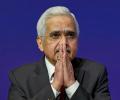
Outgoing Reserve Bank Governor Shaktikanta Das said on Tuesday that restoring inflation-growth balance is the most important task ahead of the central bank. Addressing a press conference on his last day as the central bank chief, Das said his successor will have to navigate the changing world order, effectively deal with cyber threats, and focus on harnessing new technologies.

India's retail inflation, which has stayed below the Reserve Bank of India's (RBI's) 4 per cent target in recent times, is likely to remain benign in the coming months, RBI Deputy Governor Poonam Gupta said in a speech, on Friday, which was uploaded on the central bank's website on Tuesday. Headline inflation dipped to multi-year lows of around 1.5-2.8 per cent in late 2025.
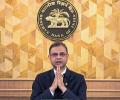
Shrugging off concerns over the depreciation of rupee, the RBI has cut interest rate by 25 basis points to 5.25 per cent in a bid to further bolster economic growth, which rose to a six-quarter high of 8.2 per cent in the second quarter of the current financial year.

Both sides have now revealed a preference for escalation over strategic defeat, and each new provocation narrows the space for the next pause. The Touska seizure, Iran's refusal to negotiate under blockade, Israel's strikes on Iranian oil infrastructure -- all of these add up to an increasingly untenable situation. This makes the wild card -- Trump and his motormouth -- more consequential than ever, notes Prem Panicker in his must read blog on the Iran War.

'Challenge is basically near-term growth as the outlook has turned a bit adverse.'

The Reserve Bank of India (RBI) is in no rush to launch the central bank digital currency (CBDC) nationwide, as its most promising use case - cross-border payments - depends on other countries rolling out their own CBDCs simultaneously for the system to work effectively. That said, the CBDC pilot is progressing well, with the user base in India expanding to about seven million, said RBI Deputy Governor T Rabi Sankar.
"We are contributing about 18 per cent, which is more than the US where the contribution is expected to be much less -- about 11 per cent or something. We are doing very well and we will continue to improve further," RBI governor Sanjay Malhotra said, replying to a question on Trump's recent comments.
The rupee appreciated 13 paise to close at 90.34 against the US dollar on Thursday, on trade deal optimism and overnight decline in commodity prices, even as the upside remained capped as investors look for more clarity on the India-US trade deal.

Shrugging off concerns over the depreciation of rupee, the RBI has cut interest rate by 25 basis points to 5.25 per cent in a bid to further bolster economic growth, which rose to a six-quarter high of 8.2 per cent in the second quarter of the current financial year.
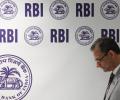
The core dilemma remains: Why provide further stimulus to an economy that is already booming at an 8 per cent growth rate? asks Rajeswari Sengupta.

P K Mishra, a retired IAS officer of the Gujarat cadre, is currently serving as the principal secretary to the prime minister.

The Indian rupee, swaying through multiple headwinds, tiding over global trade disruptions and massive foreign fund outlfows, is unlikely to arrest its descent until tariff impact overhangs, notwithstanding robust domestic macroeconomic tailwinds. The Reserve Bank of India (RBI), which sees the rupee's depreciation as a silver bullet to offset the tariff shock, expects the currency to find its stable course once India reaches a trade deal with its largest trading partner, the US.

The best way for India to prepare is by preserving and strengthening the RBI's hard-won credibility, point out Rajeswari Sengupta and Vaishali Garga.
The Reserve Bank of India (RBI) is expected to cut interest rates for the first time in nearly five years in Governor Sanjay Malhotra's first monetary policy committee (MPC) meeting on Wednesday. The meeting of the six-member MPC, which will culminate on Friday, aims to boost sluggish economic growth, which is seen falling to a four-year low. Malhotra took charge as the 26th RBI governor in December last year.

The Reserve Bank of India (RBI) on Wednesday kept its policy interest rate unchanged at 5.5 per cent for the second consecutive time, citing concerns over tariff uncertainties.
